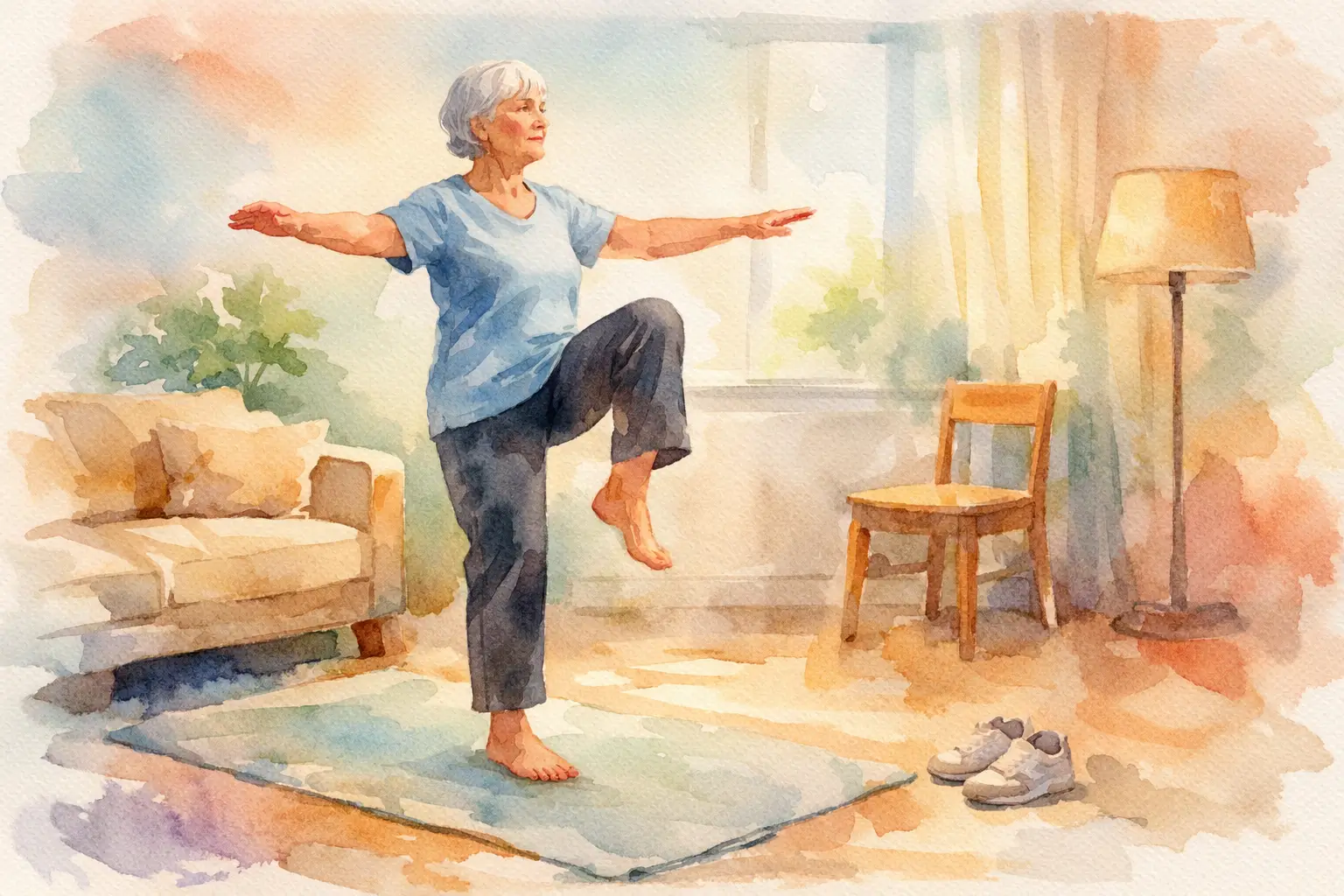
Balance Exercises for Fall Prevention at Home
Falling is not an inevitable part of aging, but it is often caused by declining leg strength and changes in coordination. Regular balance training can improve stability and reaction times. This guide outlines five safe at-home exercises and provides safety tips for those at an increased risk of injury.
A missed curb, a slippery bathroom floor, or turning too quickly to answer the phone can change a routine day in seconds. Balance exercises for fall prevention cannot eliminate every risk, but practiced regularly, they can help strengthen the body and reactions that keep you steady when life gets a little off-center.
Falls are common as people get older, but they are not an inevitable part of aging. Balance can change for many reasons, including reduced leg strength, vision changes, arthritis, inner-ear conditions, numbness in the feet, and medication side effects. That is why a useful fall-prevention plan looks beyond exercise alone. Still, movement is one of the most practical places to begin.
Why balance practice can help prevent falls
Balance is not just the ability to stand on one foot. It is the coordination of your muscles, vision, inner ear, joints, and brain as you shift position or respond to an unexpected loss of footing. Getting out of a chair, looking over your shoulder while walking, and stepping around a pet all call on this system.
Research supports exercise as a fall-prevention strategy for many older adults, particularly programs that challenge balance and build strength. The U.S. Preventive Services Task Force recommends exercise interventions for community-dwelling adults age 65 and older who are at increased risk of falls. The Centers for Disease Control and Prevention also identifies strength and balance activities as an important part of reducing fall risk.
The evidence does not mean that one particular move is a cure. Benefits depend on the type of exercise, how consistently it is done, a person's health conditions, and other fall risks at home or in daily life. A program is most useful when it is challenging enough to improve balance but still safe enough to repeat.
Start with a safety setup
Choose a clear, well-lit space with a stable counter, heavy table, or sturdy chair nearby. Avoid using a rolling chair, a towel rack, or a piece of furniture that could slide. Wear supportive shoes with nonslip soles rather than socks or slippers that shift on the floor.
At first, keep one or both hands close to your support surface. The goal is not to prove that you can exercise without holding on. The goal is to gradually teach your body to control movement safely. If possible, have someone nearby when trying a new activity, especially if you have fallen recently or feel unsteady.
Stop and seek medical advice promptly if exercise causes chest pain, faintness, severe shortness of breath, new weakness, or unusual pain. People with severe osteoporosis, recent surgery, a neurologic condition, significant vision loss, or a condition affecting blood pressure may need individualized guidance from a clinician or physical therapist before starting.
Five balance exercises for fall prevention
Try these exercises two or three times a week, leaving a day between sessions if your legs feel sore. Begin with a small number of repetitions and build gradually. Quality matters more than doing a large number quickly.
1. Sit-to-stand from a chair
This practical exercise strengthens the hips and thighs used for standing, climbing stairs, and recovering from a small stumble. Sit toward the front of a firm chair with your feet flat and about hip-width apart. Lean your chest slightly forward, press through your feet, and stand up tall. Slowly lower yourself back to the chair with control.
Use the armrests or your hands on the chair at first if needed. As you gain confidence, use less hand support. Aim for 5 to 10 repetitions. If your knees hurt, check that your feet are not too far forward and ask a physical therapist or clinician for advice if pain continues.
2. Heel-to-toe standing
Stand beside a counter with a hand resting lightly on it. Place one foot directly in front of the other so the heel of the front foot touches, or nearly touches, the toes of the back foot. Hold for 10 to 20 seconds, then switch which foot is in front.
This narrows your base of support, much like walking along a tight path. Start with both hands available for support. Progress by using one fingertip, not by closing your eyes or removing support before you are ready.
3. Single-leg stands with support nearby
Hold the counter and shift your weight onto one leg. Lift the other foot just an inch or two from the floor, then hold for up to 10 seconds. Repeat on the other side. It is normal for one side to feel less steady.
This exercise is effective only when it is performed safely. Keep your hand on the counter until you can hold the position without wobbling significantly. A little challenge is useful; a near-fall is not.
4. Side stepping
Stand at one end of a counter so you can keep your fingertips on it. Step sideways with one foot, then bring the other foot in without crossing your legs. Take 5 to 10 steps in one direction, then return.
Side stepping strengthens the muscles at the outer hip, which help steady the pelvis while walking and turning. Keep your toes facing forward and move slowly enough that you do not need to grab the counter.
5. Marching in place
Stand tall at a counter and slowly lift one knee, lower it, then lift the other. Try to avoid leaning backward or gripping the counter tightly. Begin with 10 total marches and work up as comfortable.
Marching asks you to transfer weight from one leg to the other, an essential part of walking. To make it modestly harder, pause for a second with each knee lifted. Do not add speed until your control is reliable.
How to make the exercises more effective
Regularity is more valuable than an occasional long workout. Many people do well by linking practice to an existing routine, such as after morning coffee or before preparing dinner. A 10- to 15-minute session can be enough to build a dependable habit.
As an exercise becomes easy, adjust only one element at a time. You might add a few seconds to a hold, reduce hand support from a full grip to fingertips, or add repetitions. Moving too quickly from full support to no support can turn a helpful exercise into an unnecessary risk.
Walking is beneficial for heart health and general fitness, but walking alone may not challenge balance enough for someone who is already unsteady. A well-rounded plan often combines walking or another aerobic activity with leg strengthening and specific balance practice. Tai chi can also be a reasonable option for many people because it emphasizes controlled weight shifts and posture, though class format and instructor experience matter.
Exercise is one part of fall prevention
A fall often has more than one cause. If you have fallen, nearly fallen, or begun holding onto furniture as you move around the house, bring it up at your next medical visit. A clinician can review possible contributors, including blood pressure changes when standing, medications that cause drowsiness or dizziness, foot problems, vision changes, and vitamin or nutrition concerns when appropriate.
Home conditions deserve attention too. Improve lighting on stairways, secure or remove loose rugs, keep pathways clear, and add grab bars where they are properly installed in bathrooms. These changes do not replace exercise, but they can reduce situations where balance is tested unnecessarily.
A physical therapist can be especially helpful after a fall, hospitalization, joint replacement, stroke, or new diagnosis affecting movement. They can assess gait, leg strength, footwear, assistive-device fit, and the specific situations that make you feel unsteady. For some people, individualized training is safer and more productive than following a general routine at home.
When to get checked before starting
Schedule a conversation with a healthcare professional before beginning a new program if you have had two or more falls in the past year, feel dizzy when standing, have new trouble walking, or rely on furniture to get around. The same is true if numbness, weakness, or pain in your feet or legs is limiting your movement.
Feeling somewhat challenged during balance practice is expected. Feeling frightened, repeatedly losing your balance, or needing to catch yourself is a sign to scale back and get guidance. Confidence grows best from safe, repeatable success.
The most helpful first step may be surprisingly small: clear a space at the kitchen counter, practice a few controlled sit-to-stands, and notice what feels difficult. That observation can guide a conversation with your clinician, physical therapist, spouse, or caregiver and help turn fall prevention into a steady part of protecting your independence.
Related reading
Movement & Mobility · Daily
Build Bone and Muscle: Walk Your Way to Strength
Regular walking does more than just get you from place to place. It's a simple, effective way to strengthen your bones and muscles, supporting your independence and mobility as you age.
Medicare · Daily
Understanding your Medicare annual wellness visit
The Medicare Annual Wellness Visit is a yearly opportunity to discuss your health with your doctor, focusing on preventive care and planning for the future. It's not a head-to-toe physical, but a valuable conversation designed to keep you healthy as you age.
Healthy Aging · Daily
Keep Moving: The Simple Power of Regular Movement for a Longer, Healthier Life
Aging well isn't about grand gestures or intense workouts; it's about consistency. Discover why integrating small, frequent movements throughout your day is more impactful than you might imagine.
Preventive Care · Daily
Don't skip that dental cleaning: it's about more than just your teeth
Regular dental check-ups and cleanings are crucial for maintaining good oral health, but their benefits extend far beyond your mouth, impacting your overall well-being and preventing serious health issues.
Deeper in this pillar
My Health Almanac
A personalized monthly edition of The Health Almanac, written for you.
Discover your personal movement & mobility snapshot/archive/2026/07/20/balance-exercises-for-fall-prevention-at-home