
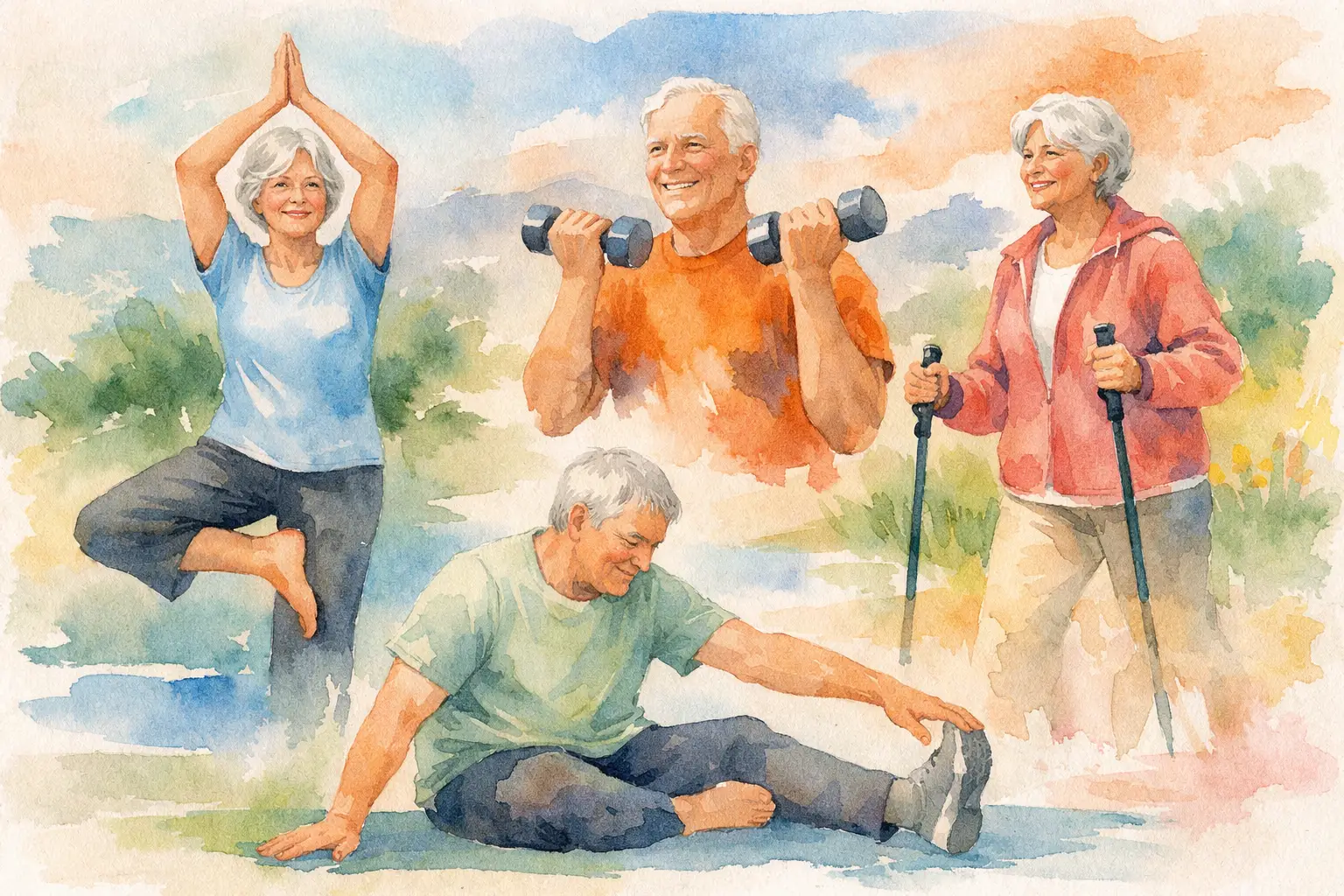
10 Best Exercises for Seniors to Stay Strong
Daily functional exercises help seniors maintain the independence and strength required for activities like climbing stairs or carrying groceries. A balanced routine should incorporate aerobic movement, strength training, and balance work adapted to individual mobility levels. Experts recommend starting with small, consistent sessions and consulting a physician if balance issues or chronic pain…
A sturdy chair can be one of the most useful pieces of exercise equipment in the house. Standing up from it without using your hands practices a movement most people rely on every day. That practical focus is what makes the best exercises for seniors different from a complicated workout plan: they build the strength, balance, endurance, and flexibility needed for daily life.
Regular movement can support heart health, bone health, mood, sleep, and the ability to remain independent. Federal physical activity guidelines recommend that older adults include aerobic activity, muscle-strengthening exercise, and balance training in a weekly routine. The right starting point, however, depends on your current health, mobility, medications, and goals.
If you have chest pain, unexplained shortness of breath, frequent falls, severe joint pain, or a new medical condition, speak with your clinician before starting or changing an exercise program. A physical therapist can be especially helpful after an injury, surgery, stroke, or significant change in balance.
What makes an exercise useful for older adults?
The most helpful routine is usually not the hardest one. It is one you can perform safely, repeat consistently, and gradually make more challenging. For many older adults, the priority is preserving function: getting up from a chair, carrying groceries, reaching a high shelf, climbing stairs, turning safely, and walking with confidence.
A well-rounded plan includes four types of movement. Aerobic exercise builds endurance for walking and other daily activities. Strength work supports muscles and bones. Balance practice helps you control your body position while standing and moving. Mobility exercises help joints move through a comfortable range of motion.
You do not need to do all four in a single session. Short sessions count, and beginning with five or 10 minutes can be a sensible choice. The goal is steady progress, not exhaustion.
10 best exercises for seniors
1. Brisk walking
Walking is adaptable, inexpensive, and useful for cardiovascular fitness. A pace that makes breathing faster but still allows you to speak in short sentences is often a reasonable moderate-intensity target. Start on a flat, familiar route or indoors at a mall, community center, or home if weather or uneven sidewalks are a concern.
For someone who has been inactive, two or three five-minute walks may feel more manageable than one longer outing. Supportive shoes and an assistive device, if prescribed, can make walking safer.
2. Sit-to-stands
Sit-to-stands strengthen the thighs, hips, and core while rehearsing a daily task. Use a stable chair that does not have wheels. Sit near the front edge with both feet flat and about hip-width apart. Lean slightly forward, press through your feet, stand tall, then slowly lower yourself back down.
Use the chair arms or your hands on the seat at first if needed. As strength improves, reduce the amount of hand support. Aim for controlled movement rather than quickly completing repetitions.
3. Wall push-ups
Wall push-ups build strength in the chest, shoulders, arms, and trunk without requiring you to get down to the floor. Stand facing a wall, place your hands at about shoulder height, and step back until your body forms a gentle diagonal line. Bend your elbows to bring your chest toward the wall, then press away.
Move your feet farther from the wall to make the exercise harder. Keep the movement comfortable, particularly if you have shoulder arthritis or a prior shoulder injury.
4. Resistance-band rows
Rows strengthen the upper back and can improve the pulling motion used for doors, drawers, and household tasks. Secure a resistance band according to its instructions, or loop it around a stable anchor point. With a tall posture, pull the band toward your ribs while gently drawing your shoulder blades back and down.
Avoid anchoring a band to an unstable object or a door that could open toward you. Resistance bands can snap as they age, so inspect them for cracks or worn spots before use.
5. Heel raises
Strong calf muscles help with walking, stairs, and maintaining stability when your body shifts forward. Stand behind a sturdy chair or kitchen counter and hold on lightly. Slowly rise onto the balls of both feet, pause, then lower your heels with control.
If both-leg heel raises become easy, a clinician or therapist may suggest progressing to one leg at a time. People with significant foot pain, recent foot surgery, or severe balance problems should ask for individualized guidance first.
6. Step-ups
Step-ups build leg strength and prepare the body for curbs and stairs. Use the bottom step of a staircase with a secure handrail, or a low, stable exercise step. Step up with one foot, bring the other foot up, then step down slowly.
Begin with a low height and keep a hand on the rail. Knee pain is a signal to adjust the step height, range of motion, or exercise choice rather than pushing through sharp discomfort.
7. Side leg raises
Side leg raises strengthen muscles around the hips that help stabilize the pelvis while walking. Hold a counter or chair, stand tall, and slowly move one leg out to the side without leaning your trunk. Return it with control, then repeat on the other side.
Keep the toes facing forward and use a small range of motion. Swinging the leg high is less useful than feeling the side of the hip work steadily.
8. Tandem stance and heel-to-toe walking
Balance is specific: to improve balance, practice it. For tandem stance, stand near a counter and place one foot directly in front of the other, as though standing on a tightrope. Hold the counter as needed and gradually reduce hand support only when you feel secure.
Heel-to-toe walking is a moving version. Walk slowly alongside a counter, placing the heel of one foot close to the toes of the other. These exercises should always be done near a stable support, never in an open area where a stumble could lead to a fall.
9. Single-leg standing with support
Standing on one leg challenges balance and the muscles that keep the hips stable. While holding a counter, lift one foot just off the floor and stand on the other leg for a few seconds. Repeat on both sides.
This is not a test of toughness. Two seconds of safe, supported practice can be a productive starting point. Progress by holding the position a little longer, not by removing support too soon.
10. Gentle mobility for the ankles, hips, and upper back
Mobility work can make everyday movement feel easier, especially after long periods of sitting. Useful options include ankle circles while seated, seated knee lifts, shoulder rolls, and gentle upper-back rotations. Move slowly and stay within a comfortable range.
Stretching may improve flexibility, but it is not a replacement for strength or aerobic exercise. Avoid bouncing, and stop any movement that produces sharp pain, numbness, or dizziness.
How to build a safe weekly routine
A practical starting routine might include walking most days, strength exercises two nonconsecutive days per week, and brief balance practice on several days. You could pair a short walk with sit-to-stands and wall push-ups one day, then add rows, heel raises, and side leg raises the next. Balance practice can fit into daily life, provided you have stable support nearby.
The Centers for Disease Control and Prevention and other public health organizations generally recommend working toward 150 minutes a week of moderate aerobic activity, plus strength activity at least two days weekly. That target is helpful, but it is not an all-or-nothing requirement. Someone beginning at 20 minutes a week can still gain from becoming more active and can build gradually.
Use a simple effort check. During aerobic activity, you should usually be able to talk but not sing. During strength work, the last few repetitions should feel challenging while your form remains controlled. If you can easily continue far beyond your planned repetitions, the movement may be ready for a small progression, such as another repetition, a slightly stronger band, or a longer walk.
When to pause and get advice
Normal exercise sensations include mild muscle fatigue and temporary soreness that improves within a day or two. Stop exercising and seek medical advice promptly for chest pressure, fainting, severe shortness of breath, a racing or irregular heartbeat, or pain that is sudden, severe, or worsening.
Medication effects matter, too. Some medicines can contribute to dizziness, dehydration, or changes in blood pressure. If you notice new lightheadedness during exercise, discuss it with your pharmacist or healthcare professional rather than assuming it is simply part of aging.
A good exercise plan should make daily life feel more manageable, not leave you worried about the next session. Choose one or two movements that feel achievable this week, practice them consistently, and bring any questions about pain, balance, or progression to your healthcare team.
Preferred Source
Enjoy The Health Almanac?
Add us as a preferred source on Google to see more Health Almanac articles in your Google results.
/archive/2026/07/20/10-best-exercises-for-seniors-to-stay-strong